







Whenever you sit down to type, the height of your keys may be the last thing on your mind, till your wrists begin to hurt. Choosing a low profile keyboard vs normal mechanical one is a wise choice that you can make to feel relaxed while typing and doing your work for hours. And it isn't all about looks; it changes how your fingers move and how your fingers don't ache after a hard day at the office. In this article, we will explain the difference between these two types so you can make a better choice for your comfort.
What Is a Low-Profile Keyboard?
A low-profile keyboard falls somewhere between a slim laptop keyboard and a thick mechanical keyboard. The case is thinner, the switches inside are shorter, and the top keycaps are flat. It's designed to make a real mechanical board clicky without you having to hold your hands so high.
How It Differs in Height and Design
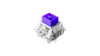
The most significant difference is in the parts' physical height. The switches in a standard keyboard are about 18.5mm high. That was cut down to “low profile switches,” which are found between 11mm and 15mm. This isn't a design choice just for style, but a balance of low-profile mechanical keyboards benefits and challenges. Thinner keyboards require less wrist bending upward. This keeps your hands at a comfortable low level.
Plastic tops you touch are also different; they are called keycaps. Normal keys have a "sculpted" shape. The low-profile keys are almost always flat and thin, like those on a MacBook. This allows the fingers to slip from key to key without hooking on the edges.
Key Travel and Typing Feel
Typing feel is based on a technical measurement called travel distance. This is where the key goes from top to bottom. On a low-profile board, that distance is cut to about 2.5mm to 3.0mm. A shorter distance means you reach the "actuation point" faster. The actuation point tells the computer system when you press a key.
This shorter travel distance gives low-profile keyboards a snappier and more responsive feel. Each press requires less force and movement, allowing for faster, lighter typing.

What Is a Normal or Standard Keyboard?
It's the big, solid board keyboard most of us grew up using for decades. If you look at one from the side, it is high off the table. They are often called “full-profile keyboards.”
Typical Design and Key Features
The most noticeable feature is the height. A standard keyboard is 30mm to 40mm high without keycaps. If you look closely at every key, you will find the rows are different heights and angles so that they fit your fingers best. While this helps you see the letters better, your wrists have to point upward, which is why so many people use a soft wrist rest with these models.
Common Switch Types and How They Feel to Type On
A standard keyboard has a plastic part under each key called a switch. The total travel distance of such switches is usually 4.0mm. It's that space where the key goes from top to bottom. There are several different switches:
- Clicky Switches: These have a loud snap when you press them. It sounds like a tiny ballpoint pen clicking. It brings a satisfying audible feedback when you type.
- Tactile Switches: These are like a little bump you can feel in your fingertip halfway down. This lets you know that the key worked without making a lot of noise, unlike clicky ones.
- Linear Switches: These are quiet and smooth. There is no bump and no click. The key slides straight down smoothly, but not as smoothly as in low-profile keyboards.
Key Differences between Low-Profile and Normal Keyboards
When you put a low profile keyboard vs normal keyboard together, the physical gap is obvious. Let’t have a close look.
1. Keycap and Switch Height
The most fundamental difference is the stack height. A normal mechanical switch is 18.5mm tall with the keycap on top, adding another 10mm or so. This feels like a tower under your finger. Low-profile switches reduce the internal spring and housing to about 11mm-15mm, which are thin and flat.
2. Ergonomics and Comfort
Ergonomics is simply another way of saying "how it fits your body." Since low-profile keyboards are so flat, your wrists can remain straight. So no need to "claw" your hands or flinch your wrists upward to get to the keys. Normal keyboards force you up a steeper angle instead. Without a support cushion, when using a normal board, you may find your joints dull and achy because your tendons are stretched back all day.
3. Aesthetics and Portability
Low-profile keyboards are designed for a clean desk look. They look like they could be in a top office or a minimal studio without taking too much space. They are thin and light and therefore easier to stuff into a laptop bag. Normal keyboards are big and bulky; they cannot be carried easily around. For anyone who travels for work or works from a coffee shop, the slim design wins hands down.
4. Gaming Performance
In games, every millisecond matters. Here, "actuation" matters. Normal keyboards have you press the key down about 2.0mm before the computer sees the move. And on many low-profile boards, that distance is trimmed to 1.0mm or 1.5mm. Since the keys are short, you can tap them faster. That makes low-profile boards great for fast games where you have a short time to make your moves.
5. Customization and Compatibility
Here is where, in low profile keyboard vs normal competition, normal keyboards win easily. The world of "custom keyboards" is built for standard sizes. Whether you want to buy cute, bright keycaps or switch out your switches for another brand, normal boards offer thousands of options.
Low-profile boards are much more restrictive. They are so thin that special connectors are used. You can not just pop the keys off a standard board and stick them on a low-profile one. They'll just not fit!
6. Sound Profile
Size changes the sound. A normal keyboard has a large, hollow case which acts like a drum, and makes the “clack and click” sound louder and deeper. Low-profile keyboards leave little room inside the base.
This efficiently mutes the sound and makes it higher-pitched. That sounds like a “tap” instead of a “clack”. In a quiet office environment, a slim board with lower sound is usually more preferable to your coworkers.
A glance table helps you to better overview:
|
Aspect |
Low-Profile Keyboard |
Normal Keyboard |
|
Keycap & Switch Height |
Shorter (11-15mm), thin and flat |
Taller (~28mm), tower-like feel |
|
Ergonomics & Comfort |
Wrists stay straight, less strain |
A steeper angle can cause wrist ache |
|
Aesthetics & Portability |
Slim, lightweight, easy to carry |
Bulky, heavy, not travel-friendly |
|
Gaming Performance |
Faster actuation (1.0-1.5mm), quicker response |
Slower actuation (~2.0mm) |
|
Customization & Compatibility |
Limited keycap/switch options |
Wide range of custom keycaps and switches |
|
Sound Profile |
Quieter, light “tap” sound |
Louder, deeper “clack and click.” |
Elevate Your Workspace with MelGeek O2: Where Low-Profile Meets High Performance
The MelGeek O2 is for those who want the sleek look of a MacBook but the "springy" feel of a real mechanical keyboard. It is thin and easy on the hands but still delivers satisfying tactile feedback and reliable performance for both work and play.
A Design Made for Your Comfort
The O2 is slim, that is, 22mm high at the front without keycaps. It's flat, so your wrists stay straight instead of bending upwards. This prevents your hands from becoming tired. The keys also have a "gasket mount," it increases the key’s rebound softness, making the overall typing feel more ‘bouncy’ and smooth.
Light and Fast Keystrokes
Inside the magic happens with Kailh Sunshine switches: These are very low-profile parts measuring only 11.9mm tall. Better still, your keyboard sends the signal to the PC whenever you move it by only 1.2 mm! That makes typing seem very light. They are "linear" switches that move straight.
Triple Connection & Massive Battery
This is a smart keyboard. It is connected via wire, USB plug, or Bluetooth. It can even remember eight devices all at once. The battery is also great; it can last seven months off a single charge in low power mode if it works 8 hours per day.
MelGeek O2 combines sleek design, comfortable typing, and cutting-edge technology to deliver a premium low-profile keyboard experience. Ideal for work, it features fast, responsive keys, versatile connectivity, and long-lasting battery life, offering a perfect blend of style and performance.

Final Words
Choosing a low profile keyboard vs normal one totally depends on your daily work outline and habits. Want a slim, fast board with no bulky rest for your wrists? The low-profile style is a game-changer. Standard boards have more custom parts available, but the thinner design is a definite advantage for modern speed and comfort.
Frequently Asked Questions
1. Are low-profile keyboards better for your wrists?
Yes. They're flat, so your hands stay put. This stops you from bending your wrists upward, and the typical aches and pains of tall, bulky standard keyboards are also avoided.
2. Can you change keycaps on low-profile keyboards?
No. You cannot change them because they are so thin and have less space underneath them. They are attached to special connectors to function in a quick and efficient manner.
3. Are low-profile switches better for typing?
Yes. They are better for typing, as their keycaps are lower in height and they offer quick operation. They have great speed due to short actuation time, hence providing a fast and better typing experience.
4. Do low-profile switches last as long?
Yes. They have the same high-quality materials as standard switches. The majority are rated for 50 million presses, or more so, they will be reliably serviceable for many years of daily office work.
5. Is it hard to switch from a laptop keyboard to a standard?
Yes. It may feel awkward at first. Typical keys are much taller and further apart. You might "trip" over the keys until you get used to the 4mm travel.