






The MADE68 Ultra V2 launched April 28, 2026. It is a 65% Hall Effect keyboard at $219-$239 — and it puts real pressure on keyboards that cost more. This review covers the hardware honestly: what works, what has real trade-offs, and who should look elsewhere.
Verdict Up Front
$219-$239 for full CNC aluminum, 8,000 Hz polling, 0.01 mm Rapid Trigger, Multi-MCU architecture, and a 360° ambient light bar is strong value in the 2026 Hall Effect market. The MADE68 Ultra V2 delivers on every specification it advertises. The main caveat worth knowing before buying is that it is wired-only; HIVE 2.0 configuration is handled through MelGeek's web driver and app workflow rather than VIA or QMK.[1][4]
Specifications
| Spec | Detail |
| Layout | 65% — 68 keys |
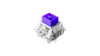
| Switch options | KOM Lite Magnetic / Flip King Magnetic (3rd-gen Hall Effect, both hot-swappable) |
| Actuation range | 0.1–3.4 mm, adjustable per key |
| Total travel | 3.5 mm ±0.2 mm |
| Polling rate | 8,000 Hz via USB-C |
| RT precision | 0.01–2.5 mm, per key |
| Architecture | Multi-MCU: 1 main + 5 zone sub-controllers |
| Chassis | Full CNC aluminum — top case, base, side panels |
| Dimensions | 319 × 117 × 40 mm (front height 18 mm, 7° angle) |
| Weight | 1,175 g |
| Lighting | 189-LED 360° perimeter ambient bar + full per-key backlight |
| Mount | Silicone Dampened Gasket |
| Dampening layers | 5: PORON, switch pad, latex foam, latex wrap, PET membrane |
| Connection | USB-C wired only |
| Software | HIVE 2.0 — web driver and app configuration |
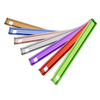
| Colorways | Night Purple, Classic Black, Frost White, Boom Pink |
| Launch date | April 28, 2026 |
| Price | $219-$239 |
| Warranty | 2 years from delivery |
Build: Full Aluminum, and You Can Tell
1,175 grams means full CNC aluminum throughout — not a plastic frame with an aluminum top plate. The upper case, base, and all 11 interchangeable side panel designs are machined aluminum.[1] Two surface treatments: electrophoresis coating on the top case (smooth, fingerprint-resistant, slightly matte) and anodizing on the base (harder, more scratch-resistant). They catch light differently, which creates a deliberate two-layer visual effect.
The Silicone Dampened Gasket Mount gives a cushioned, slightly springy response on bottom-out. Combined with five internal dampening layers (PORON, switch pad, latex foam, latex wrap, PET membrane), the result is acoustics that punch well above the price point. Bottom-out sounds muted and solid rather than hollow or clacky. This is a gaming keyboard that doesn't sound like one.
Hall Effect Engine: What Third Generation Means
MelGeek's previous Hall Effect generation used a single MCU. The third-generation platform in the MADE68 Ultra V2 adds a distributed architecture: one main controller coordinating five zone sub-controllers.[1][2] Each zone handles its own key state processing independently. Under heavy simultaneous input — WASD plus abilities plus macro all firing at once during a teamfight — zones don't queue behind each other.
Rapid Trigger at 0.01 mm minimum is the current precision ceiling in consumer Hall Effect keyboards. In CS2 and Valorant, counter-strafing at 0.01–0.05 mm RT means the key registers a release the instant it starts moving upward — there's no perceptible gap between direction changes at the speed of a human finger.[3]
HIVE 2.0: The Current Configuration Platform
HIVE 2.0 is MelGeek’s current driver and configuration platform; it is not the reason for the V2 product name. The software matters because it controls the keyboard’s gaming features, lighting, profiles, and macros:[4][8][1]
- VALORANT Game Sync: Live API integration — in-game events like damage received, ability use, and kills trigger specific reactions on the 360° ambient bar when HIVE 2.0 is active.
- Per-key RT profiles: HIVE 1.0 applied RT globally. HIVE 2.0 lets you configure RT sensitivity per key and save named profiles — useful for different games or playstyles without reconfiguring from scratch.
- AI Lighting: The 189-LED ambient bar and per-key backlight operate as independent layers. The ambient bar can respond dynamically to which keys you use most in a given session.
HIVE 2.0 can be opened through MelGeek’s web driver and app workflow. Settings save to onboard memory and persist on other computers after configuration, so the practical setup flow is to configure the keyboard in HIVE, save the profile, and use the keyboard normally afterward.

The Ambient Light Bar in Context
189 LEDs wrap the keyboard's underside perimeter. The glow hits the desk surface from all four sides and reflects back, creating an ambient ring around the keyboard footprint.[1] In a dark gaming setup this is visually distinctive. In a bright office it's less perceptible. Whether this feature justifies the $219 price vs. the cheaper Ultra+ comes down entirely to whether desk aesthetics matter to your setup — the performance specs are identical between the two.[5]
KOM Lite vs. Flip King: Which Switch to Order
Both are 3rd-gen Hall Effect with identical RT, actuation, and DKS specs. KOM Lite has a crisper sound and a more direct gaming feel. TTC Flip King sounds deeper and more muted, making it easier to live with for mixed typing and gaming.[1] Both are hot-swappable via standard 5-pin/3-pin MX sockets.
Who Should Not Buy This
- Wireless setups: USB-C wired only. No Bluetooth, no 2.4 GHz. MelGeek's wireless keyboard is the O2 ($129), which uses mechanical switches at 1,000 Hz — a different product for a different use case.
- Users who expect VIA/QMK workflows: The MADE68 Ultra V2 uses HIVE instead of VIA or QMK. If your setup depends on open firmware tooling, that matters more than the operating system itself.
- F-row-dependent workflows: F1–F12 are on the Fn layer. If you rely on F-keys for IDE shortcuts or video editing, the Centauri 80 ($399) gives the same Hall Effect engine in an 80% layout with a direct F-row.[7]
- Budget-only gaming: If ambient lighting and modular DIY don't matter, the MADE68 Ultra+ delivers the same competitive Hall Effect specs at a lower price.
Available at melgeek.com (code 68V2 saves $10) and Micro Center US. 2-year warranty from delivery.[6]
Frequently Asked Questions
Is the MADE68 Ultra V2 worth $219-$239?
For competitive FPS, yes — 8,000 Hz, 0.01 mm RT, Multi-MCU, full aluminum, and 360° ambient lighting at $219-$239 is a strong value. For wireless-required setups, other options better match that constraint.
Does it work on Mac?
Yes as a standard USB keyboard. Configuration is handled through HIVE 2.0 web/app tools, and saved onboard settings persist on Mac.
KOM Lite or Flip King — which should I choose?
KOM Lite has a crisper sound and a more direct gaming feel. TTC Flip King sounds deeper and more muted for mixed typing and gaming. Both support identical RT and actuation specs and are hot-swappable.
What is HIVE 2.0?
HIVE 2.0 is MelGeek’s configuration platform. It adds per-key RT profiles, VALORANT Game Sync, AI Lighting control, and improved macro editing through MelGeek’s web driver and app workflow.
Does the MADE68 Ultra V2 have SOCD?
Yes. SOCD registers only the most recently pressed key when A and D are held simultaneously — useful for counter-strafing in Valorant and CS2.
Is it hot-swappable?
Yes — 5-pin and 3-pin MX-compatible hot-swap sockets. No soldering required.
What is the warranty?
2 years from delivery date. Contact support@melgeek.com for warranty claims.
References
[1] MelGeek MADE68 Ultra V2 Product Page — https://www.melgeek.com/products/made68-ultra-v2-gaming-keyboard
[2] MelGeek — MADE68 Ultra V2 AI Gaming Keyboard Blog — https://www.melgeek.com/blogs/melgeek-lab/made68-ultra-v2-ai-gaming-keyboard
[3] PC Gamer — Best Hall Effect Keyboards 2026 — https://www.pcgamer.com/hardware/gaming-keyboards/best-hall-effect-keyboards/
[4] MelGeek HIVE Platform — https://hive.melgeek.com
[5] MelGeek — MADE68 Ultra+ vs MADE68 Ultra V2 — https://www.melgeek.com/blogs/melgeek-lab/made68-ultra-plus-vs-ultra-v2
[6] MelGeek Warranty Policy — https://www.melgeek.com/pages/warranty-policy
[7] MelGeek Centauri 60/80 Product Page — https://www.melgeek.com/products/centauri-hall-effect-gaming-keyboard
[8] MelGeek — Hall Effect Keyboard Customization Guide — https://www.melgeek.com/blogs/melgeek-lab/custom-hall-effect-keyboard-guide