





When deciding between a membrane and a mechanical keyboard, it largely depends on your needs. Mechanical keyboards offer superior durability, tactile feedback, and customization, making them ideal for gamers and heavy typists. Membrane keyboards are more affordable and quieter, perfect for casual use. This article explores the key differences to help you choose the best one for you.
What is a mechanical keyboard?
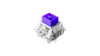
A keyboard that employs mechanical switches rather than membrane switches is called a mechanical keyboard. This indicates that a mechanical keyboard includes switches below each key that are in charge of recording keystrokes.
Mechanical Switches
Mechanical switches usually fall into three categories:
- Linear switches move smoothly without a tactile bump.
- Tactile switches create a noticeable bump during the press.
- Clicky switches add an audible click alongside tactile feedback.
No switch type is automatically faster or more comfortable. The best option depends on actuation force, travel, sound, and personal preference.
PCB, Plate, Case, and Keycaps
The PCB detects each switch input and may also control lighting, key mapping, macros, and wireless functions.
The plate holds the switches in place and affects stiffness, stability, and typing sound. Common materials include aluminum, polycarbonate, FR4, and carbon fiber.
The case supports the internal components and influences weight, resonance, and build quality.
The keycaps sit above the switches and affect texture, sound, height, and appearance. ABS and PBT are common materials, while different profiles change finger position and keyboard height.
What is a membrane keyboard?
A membrane keyboard is a computer keyboard that has pressure pads in place of individual moving elements for the keys. The keys are printed with symbols and outlines on a flexible, flat surface. Membrane keypads are created by printing conductive and colored inks onto polyester or polycarbonate films. They are also known as membrane switches or membrane keyboards. While the printed circuitry layers are contained in the bottom levels, the top layer generates the graphical design.
Membrane keyboards employ a flexible plastic sheet that is imprinted on both the bottom with electrically conductive ink and the top with the key design. The top layer contacts the bottom circuit when a key is pushed, pushing it through a spacer layer of holes.
Three layers make up membrane keyboards:
-
Top Membrane Layer: Features conductive traces on the underside, which make contact with the bottom layer.
-
Spacer layer: Features perforations where the two conductive keypads come into contact when pressed.
-
Bottom Membrane Layer: Features that correlate to conductive traces, which complete the circuit.
Membrane vs. Mechanical Keyboard: What Are the Differences?
Mechanical and membrane keyboards differ most in key feel, customization, noise, repair options, and price. Actual gaming and typing performance still depends on the complete keyboard design.

comparison table
| Factor | Mechanical Keyboard | Membrane Keyboard |
|---|---|---|
| Input system | Individual switches | Rubber domes and membrane layers |
| Key feel | Linear, tactile, or clicky options | Usually softer and less defined |
| Sound | Varies from quiet to loud | Often quieter |
| Customization | Wider switch and keycap selection | Usually limited |
| Key rollover | Often supports more simultaneous inputs | Depends on the model |
| Repair options | Some switches and keycaps can be replaced | Often replaced as one unit |
| Durability | Depends on switch and keyboard rating | Depends on dome and membrane quality |
| Weight | Often heavier | Often lighter |
| Price | Wider midrange and premium selection | Often less expensive |
| Best fit | Users who value feel and customization | Users who value price and quiet use |
Mechanical keyboards do not automatically provide better accuracy or lower latency. Firmware, polling rate, scanning, connection mode, layout, and user technique also affect performance.
Membrane keyboards do not always lack key rollover or durability. These features vary by model, so the complete specifications matter more than the keyboard category alone.
Typing Feel
With a rubber or silicone membrane behind the keys, membrane keyboards allow for quieter but less tactile typing.
Durability
Because mechanical keyboards employ actual switches rather than a rubber membrane, they are more resilient than membrane keyboards. Mechanical keyboards have an average lifespan of up to ten years, as they can sustain up to 70 million keystrokes. Membrane keyboards, on the other hand, are highly prone to wear out.
Feel
Touchscreen feedback is a well-known feature of mechanical keyboards. Keyboards with membranes do not provide the same strong tactile feedback as those with mechanical components.
Key rollover
In general, it is believed that mechanical keyboards register more keystrokes simultaneously than membrane keyboards. A critical rollover function on mechanical keyboards allows many critical pushes to be detected at once. This capability is necessary for quick typing, gaming, crouch jumping, and other activities. One important rollover function is absent from the membrane keyboard.
Customization
Compared to membrane keyboards, mechanical keyboards provide greater customization possibilities.
Adaptability
In comparison to conventional membrane keyboards, mechanical keyboards provide better typing accuracy, quicker reaction times, and a more pleasurable typing experience. Keystroke accuracy and speed can be affected by the additional force needed to record keystrokes on membrane keyboards due to their membrane layers.
Ergonomic
Because each key on a mechanical keyboard has a distinct switch beneath it, your fingers will react more quickly and smoothly while typing on one of these keyboards. The mechanical switches' tactile feedback helps lessen finger strain and increase typing accuracy. Typers, casual computer users, and gamers all like mechanical keyboards.
Price
Membrane keyboards are usually more affordable because they use fewer parts and simpler materials such as rubber domes and flexible membrane layers.
Mechanical keyboards often cost more because each key uses an individual switch, and many models add metal cases, premium plastics, replaceable keycaps, lighting, or hot-swappable components. The final price of either type still depends on build quality, features, and brand positioning.
Membrane Keyboard vs Mechanical Keyboard: Choosing the Right Keyboard for You

For typing and gaming, mechanical keyboards are frequently regarded as the greatest option. For those who spend a lot of time on the keyboard—gamers and typists—they are made to last. In addition, tactile sensation with mechanical keyboards is superior and more accurate than with membrane-switch keyboards.
Taking into account the following factors might help you select a mechanical keyboard:
-
Type of key switches: Mechanical keyboards with switches tailored for gaming are frequently preferred by gamers. Due to their smooth and constant typing without tactile bumps, linear switches like the Cherry MX Red and Gateron Red are well-liked options.
-
Size: Full-size and Tenkeyless keyboards are available.
-
Build quality: Mechanical keyboards have a sturdy build.
-
Tactility: Compared to membrane-switch keyboards, mechanical keyboards provide a more tactile feel. The response you receive when you push a key is known as tactile. According to most users' experiences, a mechanical gaming keyboard can be a wise investment for everyday computer use. You can make corrections and adjustments more quickly using the keyboard feedback than with screen-based assistance.
Additionally, Mojo68's transparent keyboard seamless connection reactivity made it the ideal accessory for both work and play. Since Mojo68 is hot-swappable, switching between switches and updating is simple. The PCB guarantees a longer lifespan with gold plating and anti-oxidation technology, and it lets you modify your keyboard without the need for soldering. However, Mojo84 is a wireless mechanical keyboard with an ANSI layout and 84 keys. A nice typing sound is produced by the silicone pad, poron foam, and integrated poron switch mat in conjunction with the gasket mount design. Its triple mode facilitates a seamless connection with a smooth connecting response. If you want to learn more about the MelGeek Mojo, you could check the Mojo series.
[product=melgeek-mojo68-plastic-see-through-custom-programmable-mechanical-keyboard|variants=Plastic / Gateron Pro Brown / US,Plastic / Gateron Yellow / US,Black / Kailh Box Plastic / US,Black / Gateron Pro White / US,Plastic / Kailh Box Plastic / US]
A playful translucent mechanical keyboard built for everyday typing. Shop now.
[/product]
Conclusion
In the debate between membrane and mechanical keyboards, the decision ultimately comes down to personal preference and intended use. Mechanical keyboards stand out for their durability, tactile feedback, and customization options, making them the go-to choice for gamers and typists who value responsiveness and longevity. While they tend to be noisier and pricier, they deliver superior performance for both gaming and extended typing sessions. On the other hand, membrane keyboards offer a quieter, more affordable option, with a more compact and lightweight design, making them ideal for users in need of a budget-friendly, quieter keyboard for casual use or shared spaces. Whether you choose a mechanical or membrane keyboard, both options have their own set of strengths tailored to different needs, and it's all about finding the right balance for your typing experience.
FAQs
Can I switch from a membrane to a mechanical keyboard easily?
It is possible to convert from a membrane keyboard to a mechanical keyboard, but doing it effectively involves technical know-how and runs the risk of damaging the keyboard.
Are mechanical keyboards really better for gaming?
Compared to other keyboard types, mechanical keyboards may be superior for gaming.
How long do mechanical keyboards last compared to membrane keyboards?
Compared to membrane keyboards, mechanical keyboards have a 6–14 times longer lifespan.
Is the noise of a mechanical keyboard too disruptive?
Particularly when typing, mechanical keyboards may be loud, which can be annoying in calm spaces.
Can I customize a membrane keyboard like a mechanical one?
Although changing the keycaps on a membrane keyboard is theoretically feasible, it's not as common or simple as it is with mechanical keyboards.