







Custom keyboards let you build a typing setup that truly feels like yours. This guide breaks down what keyboard customisation means, from swapping keycaps and choosing switch types to improving sound with case mods and foam. You’ll also learn why mechanical keyboards are the best base for custom builds, how they compare with membrane options, and what to consider when picking materials like ABS vs PBT. Finally, it covers advanced layouts, programming macros, DIY kits, cleaning tips, and where to find helpful communities and tutorials.
Keyboard Customization

Keyboards that are made to a user's specs, tastes, and style are known as custom keyboards. By acquiring and assembling components including a chassis, printed circuit board (PCB), plate, mechanical switches, and keycaps, they may be constructed from the ground up.
Additionally, keyboards can be altered to enhance their appearance, efficiency, or sound. This might mean lubricating switches to make keystrokes smoother, switching out the keycaps for ones with a different pattern or texture, and stilling the keystrokes. So keyboard customization is very needed for better experience.
Types of Keyboards to Customize
Mechanical Keyboards: A Popular Choice for Customization
A customizable mechanical keyboard with ergonomic features reduces typing fatigue. They could also include features like split layouts and adjustable angles. You may replace sections on customizable keyboards with ones that are most comfortable for you. This includes personalizing the keyboard's tone. Custom keyboards can boost productivity and effectiveness.
Furthermore, there's a loud, recognizable click sound made by the keys as you depress them. Mechanical keyboards provide extra features, including programmable keys, anti-ghosting, and n-key rollover compared to membrane keyboards. You can change how mechanical keyboards look, feel, sound, and function by remapping them.
Membrane and Other Keyboard Types
The individual mechanical switches used in a customizable mechanical keyboard —which are designed to endure millions of keystrokes—provide long-term reliability. Conversely, membrane keyboards often consist of a thinner, more flexible material, which may result in increased wear and tear over time. Put a separate mechanical switch under each key on mechanical keyboards.
These switches offer varying resistance and feedback levels, which might make typing more pleasurable. Mechanical keyboards are more reliable, easier to repair, and provide more customization than membrane keyboards. Keyboards with membranes: Position a rubber or silicone membrane beneath the keys. Membrane keyboards are often quieter but less haptic.
They are portable, lightweight, and compact. They provide less tactile sense and are more challenging to clean and maintain. While it is theoretically possible to replace the keycaps on a membrane keyboard, doing so is less popular and less complicated than with mechanical keyboards. On membrane keyboards, keycaps are usually built into the design and are not intended to be easily replaced.

Key Components of Keyboard Customization and How to Choose Them
Keycaps: The Face of Your Keyboard
Here are some different types of keycaps:
- ABS: The most common type of keycap material, ABS is inexpensive and, because of its softer plastic, makes a smoother, softer sound.
- PBT: PBT is a better material for keycaps than ABS; it sounds more substantial and is more durable. PBT keycaps are made of polybutylene terephthalate, a strong thermoplastic polymer. PBT material is more heat resistant than other plastics due to its semi-crystalline structure.
- Take Two: Double shot keycaps are created by combining two separate plastic components through molding. The imprint, cap, and housing are separated into separate layers. This aids in preventing fading or wear and tear on the impression.
- DSA: DSA keycaps are homogeneous and low-profile, with attractively textured surfaces. DSA keycaps are widely acknowledged for offering an unparalleled degree of visual appeal.
- Cherry: Cherry keycaps are premium keycaps made to last longer and type more efficiently.
When selecting keycaps for both appearance and use, you may take into account factors like:
- Keyboard profile: The sound and feel of the keycaps can be influenced by their profile. You may select a profile based on your comfort level and typing style.
- Keyboard layouts: By examining the size of the special keys and the layout of your keyboard, you may determine if a set of keycaps will fit. Extra keys or smaller keys than the usual layout are required for certain keyboards.
- Sounds: The sound you hear when typing might vary depending on the kind of material you select. For instance, you might think about the keycap material if you desire a deeper or quieter tone.
- Feeling and Colors: Certain keycaps are shiny and smooth, while others are matte and textured. For instance, PBT keycaps are better for lifespan, whereas ABS keycaps are better for color. ABS keycaps are smooth and may eventually get a greasy sheen, whereas PBT keycaps are textured and more resilient.
Switches: The Heart of Mechanical Keyboards
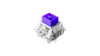
Clicky, tactile, and linear are the three main switch types used in a customizable mechanical keyboard. Most manufacturers color-code these switches: red is linear, blue is clicky, and brown is tactile.
Feeling: Before bottoming out, there is a haptic bump during the keypress. This bump is perfect for writers and typists since it shows the pressed key.
Linear: Has a tactile bump-free, smooth keypress. Regular keyboards, especially those seen on laptops or MacBooks, are comparable to linear switches. As you type, they remain silent and steady.
Clicky: Both audibly clicks and feels bumpy to the touch. Because clicky switches are often noisier than the other two varieties, some users find them to be a little unpleasant.
By changing the switches, keyboard fans may personalize their typing experience. This entails modifying switch components to get particular outcomes. For instance, you may switch out the stem for a new tactile profile or adjust the spring to get a different actuation force.

Advanced Customization Techniques
Custom Keyboard Layouts and Programming
How to Set Up a Personalized Windows Keyboard Layout
- Launch the application Microsoft Keyboard Layout Creator.
- Navigate to File > Import Current Keyboard.
- Select the layout that you wish to alter.
- To create a backup before you begin editing, select File > Save Source File As.
Size and arrangement of the keys: Depending on the coding style, compact, full-size, or ergonomic layouts may be used.
Programmable keys and macros: Workflow and efficiency in coding can be enhanced with customizable keys. By utilizing dedicated configuration tools like MelGeek Hive, you can easily remap complex shortcuts, automate repetitive tasks, or assign intricate macros to a single keystroke, streamlining your entire development process.
Ergonomics in Keyboard Design
The chance of repetitive stress injuries will be lower with these keyboards. They are available in a variety of patterns that you may customize to fit your body type. Many special functions are available on ergonomic keyboards. They are frequently divided, allowing you to maintain your arms in a more natural posture and separate them. Ergonomic design may ease stress, encourage proper posture, and enhance blood flow. Additionally, it might assist you in maintaining the ideal sitting posture to prevent upper and lower back problems.
DIY Keyboard Projects and Kits
Building Your Own Keyboard from Scratch
- Select the Keyboard of Your Choice
- Select the Components
- Obtain the Necessary Equipment
- Verify that the PCB is operational
- Switch lubrication (optional)
- Adjust your stabilizers (Optional)
- Put the PCB stabilizers on in step seven.
Add-ons and Modification Kits for Keyboards
In keyboard kits, a PCB, plate, and case are usually included. Users have access to a variety of materials, layouts, colors, and keycap settings to create a customized typing experience.
Keep the following in mind while buying keyboard modification kits:
- Hot-swappable sockets: A few simple modifications may be made with Cheery MX, Kailh, Gateron, and additional 3- and 5-pin switches.
- Pre-lubricated switches: Enable easier customization and smoother typing.
- Top-notch gasket installed with sound-absorbing foam.
Some of the most adaptable keyboards are as follows:
- Asus ROG Azoth
- Keychron Q3
- Nuphy Air 75
- Drop Alt Keyboard
- RK ROYAL KLUDGE RK61
Other factors to think about while creating a custom keyboard are as follows:
- Keycaps
- Printed circuit board (PCB)
- Keyboard casing
- Mechanical switches
- Lubricants (for switches and stabs );
- Brushes (for lubrication)
- Iron soldering
Custom keyboard caps are unique keycaps made to fit in lieu of a mechanical keyboard's stock keycaps. They are made of different materials, colors, forms, and patterns. Think about the magnitude and degree of danger.
Cleaning and Upkeep of Customized Keyboards
Ensure that your keyboard is spotless. Regular cleaning will assist prevent the growth of germs and improve your typing experience. Dust and dirt may be removed from hard-to-reach places using compressed air. After cleaning with warm water and soap, keys can also be dried with a microfiber towel.
Keep your keyboard tidy. Don't spill food on your keyboard. Hand wash before using a keyboard. Make use of a keyboard cover or protection.
Change the keycaps. The lifespan of mechanical keyboards can be extended with replaceable keycaps. You can quickly and simply replace keys if they break.
Make your screen clean. Dust and bacteria may be eliminated by cleaning your keyboard and screen.
Getting Involved: Communities and Resources for Custom Keyboard Enthusiasts
Forums for mechanical keyboards: zFrontier, Geekhack, Deskthority, Keebtalk, and overclock Keyboard that is mechanical TaeKeyboards's channels on YouTube. Websites that teach typing include keybr.com and typingclub.com. Keyboard programming tools on Usevia.com include KTouch and Klavaro. You may purchase the components for a keyboard from websites. Like NovelKeys or KBDFans and assemble it on your own. Joining the Keyboard Community is also a good way to learn how to customize keyboard. On Reddit, MelGeek also has our own community.
Conclusion: Building Your Own Keyboard
The mechanical keyboard customization offers a wide range of customization. Some claim that creating a custom keyboard and mouse may boost the self-esteem. And produce an original work of art. According to some, custom mechanical keyboards are growing in popularity because they are stronger and constructed from higher-quality materials than standard keyboards.
Frequently Asked Questions
What is the best type of keyboard for customization?
As per New York Times, customizable keyboard mechanical provides the most flexible choices as opposed to other keyboard designs.
How do I start with keyboard customization as a beginner?
For that we have to remove the factory keycaps. And replace them with ones that can be modified. On an Android smartphone, go to Settings, choose Input Method, Keyboards, and finally, Create a Custom Keyboard.
What are the benefits of customizing my keyboard?
The benefit of keyboard customization over ordinary ones is they can be customized more. By making the effort to choose suitable switches and layout, we may make typing easier.
Can I customize a regular, non-mechanical keyboard?
Even though it is conceivable, replacing the keycaps on membrane keyboards is less common. And easier than on mechanical keyboards. This is due to the fact that membrane keyboard keycaps are often integrated into the layout. They are not intended to be simply removed.
How much does it typically cost to customize a keyboard?
The majority of personalized keyboards only cost $100 to $500. While others can cost hundreds of dollars. Some advise spending between $200 and $400 on an individual keypad.