







E-sports have become so competitive that a millisecond counts. Response time, movement adjustment, and consistency of inputs have become as much a determinant as strategy or aim. This is why the magnetic keyboard is becoming the new gaming meta.
Magnetic keyboards are constructed based on the Hall Effect technology that uses magnetic contacts as opposed to mechanical contacts, which provide the keyboards with a faster response, cleaner resets, and more customization. For serious players, these switches have evolved from niche hype into essential performance gear.
This guide breaks down exactly why magnetic keyboards are surging ahead as the dominant choice, covering the tech behind them, real-world advantages over mechanical boards, key features that matter most, plus practical setup tips to squeeze every edge out of your setup.
Why Switch to a Magnetic Keyboard?
It is best to grasp the reason why gamers are abandoning conventional boards and are flocking toward magnetic solutions before discussing their specs and features.
Magnetic vs. Mechanical Keyboards
Mechanical keyboards are based on physical metal contacts. They touch and release with each press, introducing debounce delays plus gradual wear.
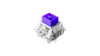
In contrast, a magnetic switch keyboard employs Hall effect sensors; these track a key's position through shifts in magnetic fields, skipping any need for contacts to open or close. No bounce issues arise. Inputs register smoother and resets happen quicker, consistency sticks around even through heavy, long-term pounding. That core shift unlocks snappier performance overall.

Why Gamers Need It
Slow movement or lost inputs can cost rounds in fast-paced games. The magnetic keyboard addresses these problems by providing adjustable actuation and instant reset behavior, such as in magnetic keyboards. It makes no difference whether you are counter-strafing in FPS games or hitting a rapid ability combo; a magnetic gaming keyboard will keep pace without stuttering.
How Magnetic Switches Work
Magnetic switches track a key’s travel distance using Hall effect sensors; they measure continuous position changes instead of waiting for a fixed contact point. Every press registers as smooth, variable movement rather than a simple on/off snap.
That analog-like detection opens the door to features mechanical switches can’t match: Rapid Trigger for instant resets, dynamic keystrokes that change function by press depth, plus near-zero effective latency.
What "Zero Latency" Really Means for a Magnetic Gaming Keyboard
"Zero latency" is a term that is thrown around frequently, but how does it really work in real life?
Knowing Where Latency Happens
Latency piles up from several sources. It consists of a combination of switch response time, scan rate, polling rate, and software processing. Mechanical switches add physical overhead through their slower operation and debounce needs, while firmware handling and USB polling pile on extra delays.
Where Magnetic Switches Excel
Magnetic switches eliminate the physical debounce phase. This, together with high polling rates and high scan speeds, enables the magnetic switches keyboard to respond nearly instantly to movement. There is no capture latency, just movement of your finger, and the input is registered.
When Speed Becomes a Reality
This applies in practice to smoother strafes, quicker resets, and more solid micro-adjustments. Players do not have to bottom out keys or wait for full resets. The motion is immediate and predictable, particularly when it comes to repetitive taps.
Key Features That Make the Best Magnetic Keyboard for Gaming
Not all magnetic keyboards are the same. The best magnetic keyboard to play competitively has certain features.
Adjustable Actuation for Faster Response
Adjustable actuation allows you to decide the degree to which a key should be pressed before it becomes activated. Shallow actuation slows down finger-travel and accelerates the reaction timeline, whereas deep actuation inhibits the accidental press of less-used keys.
Rapid Trigger for Smoother Movement Control
Set Rapid Trigger and keys reset with the slightest lift, ditching any fixed point. This is essential in games where heavy movement is involved, repetitive inputs like frantic strafes or combos can land instantly with no delays. In FPS titles especially, with the technique of counter-strafing.
Polling Rate and Why It Matters
Polling rate is the rate at which your system receives input from the keyboard. Greater polling rates imply that the system updates keyboard input more often. Magnetic keyboards can also have a very high polling rate, meaning that input data is collected with no bottlenecks.
Onboard Profiles vs Software-Only Settings
Onboard profiles save the settings on the keyboard. This includes actuation, Rapid Trigger, and key mappings. They remain the same across systems while software-only systems rely on background apps, which can cause incompatibilities or inconsistencies.
Choosing the Best Magnetic Keyboard for You
A good example of a performance-oriented magnetic gaming keyboard is the MelGeek MADE68 Pro+. It is a small 65% board designed for highly competitive gaming ( such as CS:GO, Valorant, Fortnite, etc.), which is exactly why keyboard size and layout matters for serious play.
It features TTC Sacred Heart Hall Effect switches with ultra-fine actuation control, 8000Hz polling, a 16K scan rate, and 0.125ms latency. MelGeek Hive software allows players to adjust actuation to ultra-light taps through to much heavier presses, turn on Rapid Trigger, set up custom keymapping profiles, and save them on board. Its aluminum case, mounted in a gasket and with multi-layered dampening, also gives it a stable and controlled feel without compromising its speed.

Real Gaming Problems: Magnetic Keyboards Help Solve
Magnetic keyboards not only improve speed on paper. They tackle daily problems that the players deal with.
Missed Counter-Strafes or Delayed Movement
Conventional switches are not able to reset promptly on swift direction changes. Magnetic keyboards can be reset immediately based on finger movements, which increases the effectiveness of counter-strafes.
Accidental Misinputs During Fast Gameplay
The adjustable actuation allows players to fine-tune deeper activation on keys to which they do not want to accidentally activate. This eliminates accidental feeds in such desperate situations.
Inconsistent Tapping and Slow Reactivation
Constant tapping reveals the weakness of mechanical switches. Even in quick and frequent movements, magnetic switches can be consistent due to hardware limitations.
Typing vs Gaming Sensitivity
Per-key actuation and profiles can both be done with one keyboard. Game activation of lights, typing of deeper presses. The process of swapping between them is not a hardware change, but takes only a few seconds.
How to Set Up Your Magnetic Keyboard for Peak Gaming Performance
Hardware alone isn't enough. Setup matters.
Pick the Right Actuation Point for Your Games
Shallow settings on movement keys give FPS games that speed edge; keys fire with barely a nudge. MOBA ability binds? Crank them deeper. No more fat-fingered ults mid-clutch, deliberate presses cut accidents clean.
Fine-tune your every key for the games you play, and the difference becomes clear.
Create Profiles for FPS, MOBA, and Typing
Profiles enable you to toggle between optimized configurations in real time. The gaming profile should be speedy, whereas the typing profile should be comfortable and accurate.
Set Rapid Trigger So Keys Reset Faster
Rapid Trigger settings are meant to be aggressive, bind these two movement keys and keep them away from utility keys. This balance protects against accidental inputs while remaining fast.
Remap Keys and Add Layers to Reduce Finger Travel
The use of smart remapping helps to minimize unwanted hand movement. Layers are able to position important commands near natural finger positions, enhancing reaction time and comfort.
Final Thoughts on Choosing the Right Magnetic Switches for a Keyboard
The popularity of the magnetic keyboard is not a trend, but a response to real performance needs. The magnetic input boards are faster, more customizable, and provide the long-term consistency generally unattainable by mechanical boards.
For players who put emphasis on accuracy and consistency, purchasing a high-quality magnetic switch keyboard is a step toward getting better controls, easier play time, and fewer constraints.
Frequently Asked Questions About Magnetic Keyboards
1. Do magnetic keyboards improve typing speed?
They can. Adjustable actuation and smooth travel reduce finger fatigue, which often leads to faster, more consistent typing.
2. What's the difference between Rapid Trigger and SOCD?
Rapid Trigger controls how fast a key resets. SOCD manages how conflicting directional inputs are handled, which is critical especially in movement-heavy games.
3. Do magnetic keyboards wear out like mechanical ones?
They experience far less wear since there are no physical contacts for making and breaking connections.
4. Is a Magnetic Keyboard Really Worth It?
For competitive gamers and performance-focused users, yes. The speed, control, and adaptability of a magnetic gaming keyboard offer clear advantages that traditional boards can't replicate.